
The AI Search Revolution: Will Customers Still Visit Your Website?
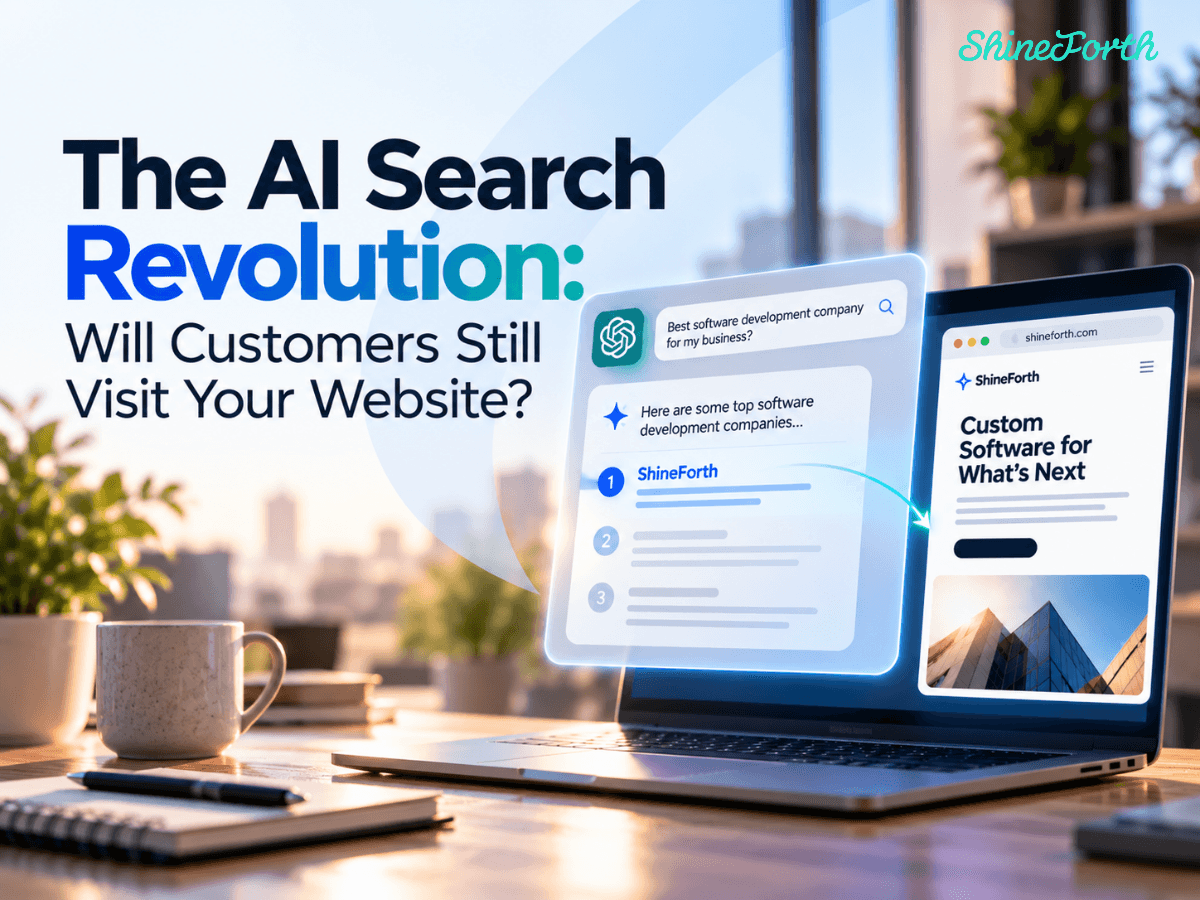
The way people search for information online is changing. For years, businesses have relied on search engines like Google to connect with potential customers, drive website traffic, and generate leads. But with the rise of AI-powered search tools, that familiar process is beginning to look different.
Instead of scrolling through pages of search results and clicking multiple websites, users can now ask tools like ChatGPT, Google AI Overviews, and Perplexity a question and receive a summarized answer almost instantly.
For businesses that have invested heavily in search engine optimization (SEO), this raises an important question: If AI can answer customers' questions directly, will they still visit your website?
The answer isn't necessarily no. But the reasons people visit websites, and how they discover them, are evolving.
From Search Results to AI-Generated Answers
Traditional search engines have largely operated by providing users with a list of relevant websites. Businesses compete for visibility through keywords, content quality, technical SEO, and other ranking factors.
AI-powered search introduces a different experience.
Rather than simply directing users to information, AI tools can gather details from multiple sources and present a consolidated response.
For example, someone researching custom software development might previously search for "benefits of custom software for businesses" and browse several articles.
Today, they might ask an AI assistant:
"Should my company invest in custom software or continue using off-the-shelf solutions?"
The AI can provide a comparison, outline potential costs and considerations, and suggest next steps without requiring the user to open a single website.
This convenience is valuable for users, but it creates new challenges for businesses that depend on organic website traffic.
The Rise of Zero-Click Searches
A zero-click search occurs when someone finds the information they need without clicking through to another website.
This behavior isn't entirely new. Featured snippets, knowledge panels, and other search features have answered questions directly within search results for years.
However, AI-generated answers are expanding the types of questions that can be answered without visiting an external source.
Instead of providing a brief definition or fact, AI tools can now summarize complex topics, compare options, and guide users through decisions.
For businesses, this means that even well-written, highly ranked content may not generate the same volume of website visits it once did.
But fewer clicks don't automatically mean fewer opportunities.
The bigger question is whether your business is still being discovered, referenced, and considered when potential customers are researching solutions.
SEO Isn't Dead, But It's Changing
As AI-powered search becomes more common, traditional SEO remains important. Search engines and AI systems still need accessible, trustworthy information to understand businesses, products, and services.
However, optimizing a website solely around keywords and rankings is becoming a less complete strategy.
Businesses increasingly need to consider how their content is interpreted and surfaced by AI-powered tools.
This has led to growing interest in approaches such as Generative Engine Optimization (GEO) and Answer Engine Optimization (AEO).
While terminology varies, the underlying objective is similar: make your website's content easier for both traditional search engines and AI-powered systems to discover, understand, and reference.
That doesn't mean abandoning existing SEO practices. It means expanding them.
A strong strategy still includes technical website performance, helpful content, clear site structure, and established credibility.
The difference is that businesses must now think beyond simply earning a spot on the first page of Google.
What Makes a Website Valuable in the Age of AI?
If AI tools can answer general questions, businesses need to give potential customers compelling reasons to visit their websites.
Here are four areas worth prioritizing.
1. Original, Experience-Driven Content
AI can summarize widely available information, but firsthand expertise and original insights provide something more valuable.
Businesses should focus on publishing content that reflects real experiences, unique perspectives, and practical knowledge.
For example, a software development company might share lessons learned from modernizing a legacy application, overcoming integration challenges, or improving performance for a growing organization.
This type of content offers context and credibility that generic articles often lack.
2. Clear, Structured Information
AI-powered search systems need to understand what a business does and how its services relate to user questions.
Websites should clearly communicate their services, industries, expertise, and solutions.
Descriptive headings, organized content, relevant internal links, and appropriate structured data can help search systems interpret information more effectively.
Businesses should also ensure important content is accessible and not unnecessarily hidden behind complicated interfaces.
3. Strong Brand Credibility
As AI tools introduce users to businesses they may not have previously encountered, brand recognition and credibility become increasingly important.
Customer testimonials, detailed case studies, industry experience, and consistent information across digital platforms can help establish trust.
The goal isn't simply to appear in an AI-generated response. It's to give potential customers confidence when they encounter your business.
4. A Website That Converts Interest Into Action
Even if AI changes how customers discover your business, your website remains an important destination when they're ready to learn more or take action.
A potential customer might use AI to research software development options but still visit a company's website to review its services, evaluate past projects, and make contact.
That's why website performance, user experience, clear messaging, and intuitive navigation remain essential.
AI may influence the research process, but your website still plays a critical role in turning interest into relationships.
Will AI Search Reduce Website Traffic?
For some businesses, particularly those that rely heavily on informational content, AI-generated answers may reduce organic traffic.
Users who previously visited a website to answer a simple question may no longer need to.
However, not all website visits serve the same purpose.
Someone searching for a quick definition has different intentions than someone evaluating a technology partner for a significant software investment.
As search behavior changes, businesses may need to place greater emphasis on attracting qualified visitors rather than simply increasing total traffic.
This also means rethinking how success is measured.
Alongside traditional metrics like organic sessions and keyword rankings, businesses should consider engagement, lead quality, conversions, branded searches, and referral traffic from AI platforms where that information is available.
AI search visibility can be difficult to measure consistently, so no single metric tells the entire story.
How Businesses Can Prepare for AI Search
The good news is that businesses don't need to completely rebuild their digital strategies to adapt.
Instead, they should begin evaluating whether their current websites are prepared for changing search behavior.
Start by asking:
- Does our website clearly explain what we do and who we help?
- Are we publishing useful, original content that demonstrates real expertise?
- Can search engines and AI-powered systems easily access and understand our website?
- Are we building credibility through case studies, testimonials, and industry-specific insights?
- Does our website provide a clear path for visitors to contact us or take the next step?
Addressing these fundamentals can improve the overall digital experience while helping businesses prepare for emerging search technologies.
It's also important to remember that AI search is still evolving. Platforms, user behavior, and the ways sources are selected and displayed will continue to change.
Businesses should approach this transition with a willingness to test, measure, and adjust rather than chasing every new optimization trend.
The Future of Search Is About More Than Traffic
The rise of AI-powered search doesn't mean websites are becoming irrelevant. It means their role is evolving.
As AI handles more of the initial research process, business websites may increasingly serve as places where potential customers validate expertise, explore solutions, and make decisions.
For businesses, the opportunity is to build a digital presence that works across both traditional search and emerging AI experiences.
At ShineForth, we help businesses build and improve websites, develop custom software, and connect the technologies that support long-term growth. As digital experiences evolve, having a website that is fast, accessible, reliable, and built around your customers' needs remains essential.
Is your website prepared for the future of search? Connect with ShineForth to discuss how your digital presence can continue supporting your business as technology changes.